初
初六。謙謙君子、用渉大川、吉。
Repeated modesty lets you even cross a great river—thorough humility overcomes hardship.
Chizan-ken / Qiān
The mountain humbly beneath the earth shows modesty that elevates. Lowering yourself brings true rise.
謙。亨。君子有終。
Modesty. Success. The noble finishes well.
Source text: the classical Zhou Yi (I Ching), public domain. Reading, translation and commentary by QOOQ Inc.
Those who stay humble prosper; lowering oneself leads to later elevation.
Interpretations if the line changes.
Repeated modesty lets you even cross a great river—thorough humility overcomes hardship.
Natural, unforced modesty. Staying correct is fortunate; inner humility is recognized.
Working hard yet modest—the noble sees things through and gains good fortune.
Modesty in action brings nothing but benefit; quiet conduct makes all go well.
Even without wealth, neighbors help the humble. Acting when needed brings benefit.
Famed modesty empowers your forces, but keep campaigns within your domain.
When you cast Hexagram 15, Qiān (Modesty), the Book of Changes shows you a situation with Kun (Earth) above and Gen (Mountain) below. The mountain humbly beneath the earth shows modesty that elevates. Lowering yourself brings true rise. Use the cards below to map that pattern onto your specific question — a love reading, a career decision, a health concern, or a yes/no choice.
A modest attitude charms; honor your partner. In a love or relationship reading, Hexagram 15 (Qiān) describes the meeting point of Kun (earth) above and Gen (mountain) below: how the outer situation meets your inner state. Ask whether you are forcing the relationship to fit a picture, or letting it move at the rhythm this hexagram suggests. For a partnered question, read the changing lines to see which side — yours or the other person's — is being asked to shift.
Humility earns trust; avoid showing off and build steady results. In work and career, Qiān points to whether the outer market or workplace (Kun (earth)) and your inner stance (Gen (mountain)) are in alignment. If a project, negotiation, or job change is the question, ask what this hexagram says about timing rather than effort: pushing harder rarely changes a Qiān situation; reading the configuration usually does.
Do not overestimate strength; listen to your body. For a body or wellness reading, treat the lines of Hexagram 15 as descriptions of phases, not diagnoses. Qiān usually signals where energy needs to be conserved versus where it is asking to be expressed. Combine the hexagram's advice with concrete medical guidance — the I Ching is a reflective tool, not a substitute for professional care.
When the question is a yes/no — should I take the offer, move, leave, commit? — read Hexagram 15 (Qiān, Modesty) as a statement about the configuration of your situation rather than the outcome. The summary "The mountain humbly beneath the earth shows modesty that elevates. Lowering yourself brings true rise." is your starting frame. Ask: does this action respect that configuration, or fight it? Changing lines, if any, tell you which specific aspect needs to bend.
Three related hexagrams obtained by re-reading the lines of “Modesty (地山謙)”. The app lets you switch to each with a single tap.
Built from lines 2–4 (lower trigram) and 3–5 (upper) of the original hexagram. It reveals the hidden, underlying situation and the essential momentum that is not visible on the surface.
“Modesty (地山謙)” → Deliverance (雷水解)
Formed by changing every line to its opposite (yin ↔ yang). It shows the exact counter-position and the concealed reverse side of the matter.
“Modesty (地山謙)” → Treading (Conduct) (天沢履)
The original hexagram turned upside-down. It shows the situation from a switched standpoint, or as seen from the other party.
“Modesty (地山謙)” → Enthusiasm (雷地豫)
Study real readings, changing lines, and FAQs. The AI edition gives tailored interpretations and dialogue.
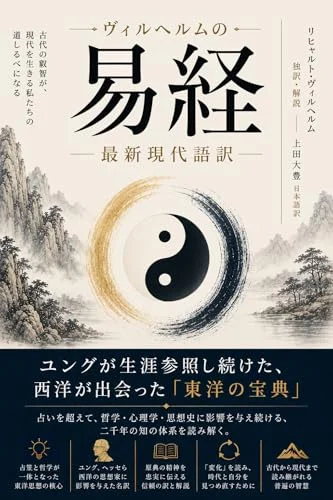
📖 The app translation is now a book
Free with Kindle Unlimited